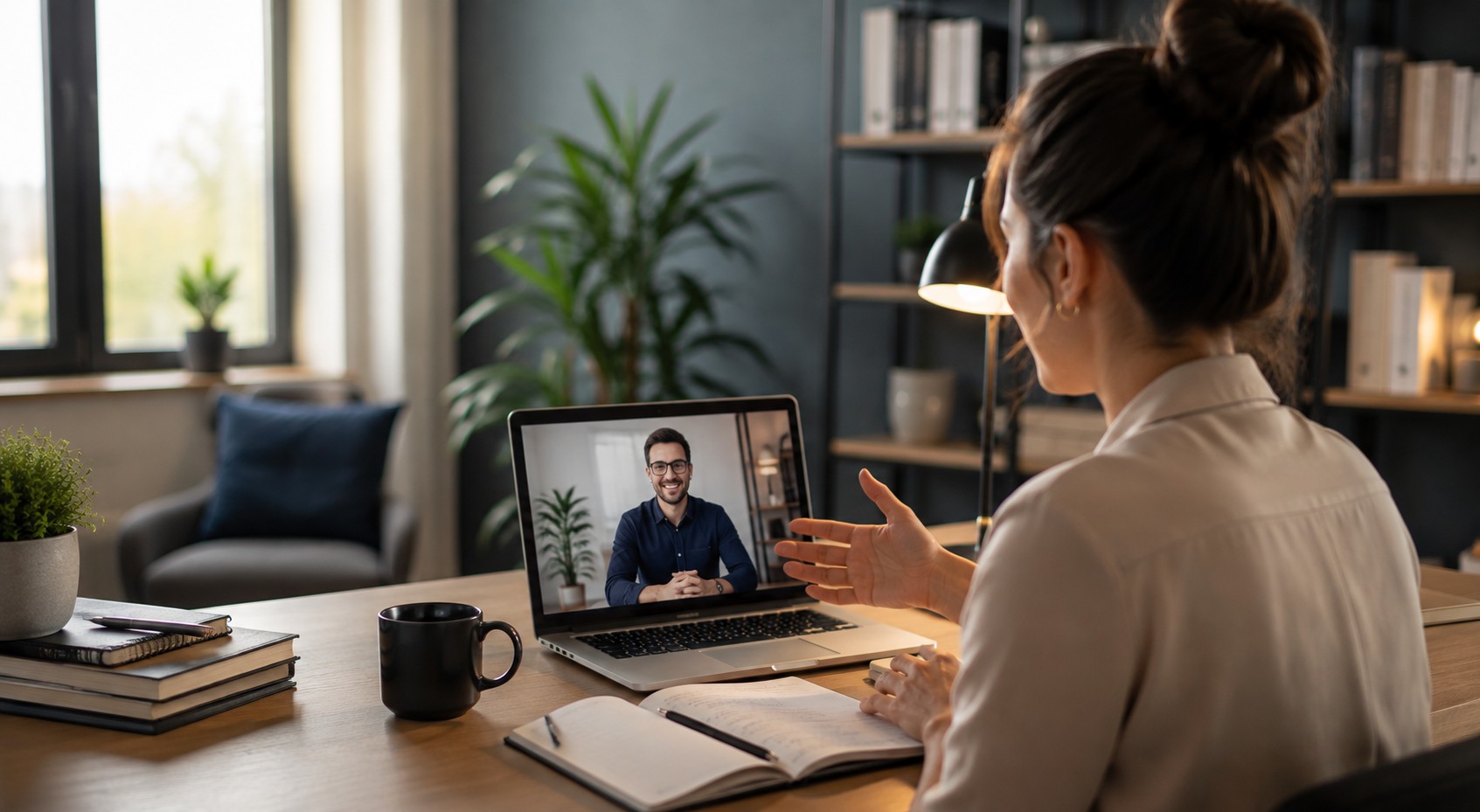
Video interviews reward preparation over polish
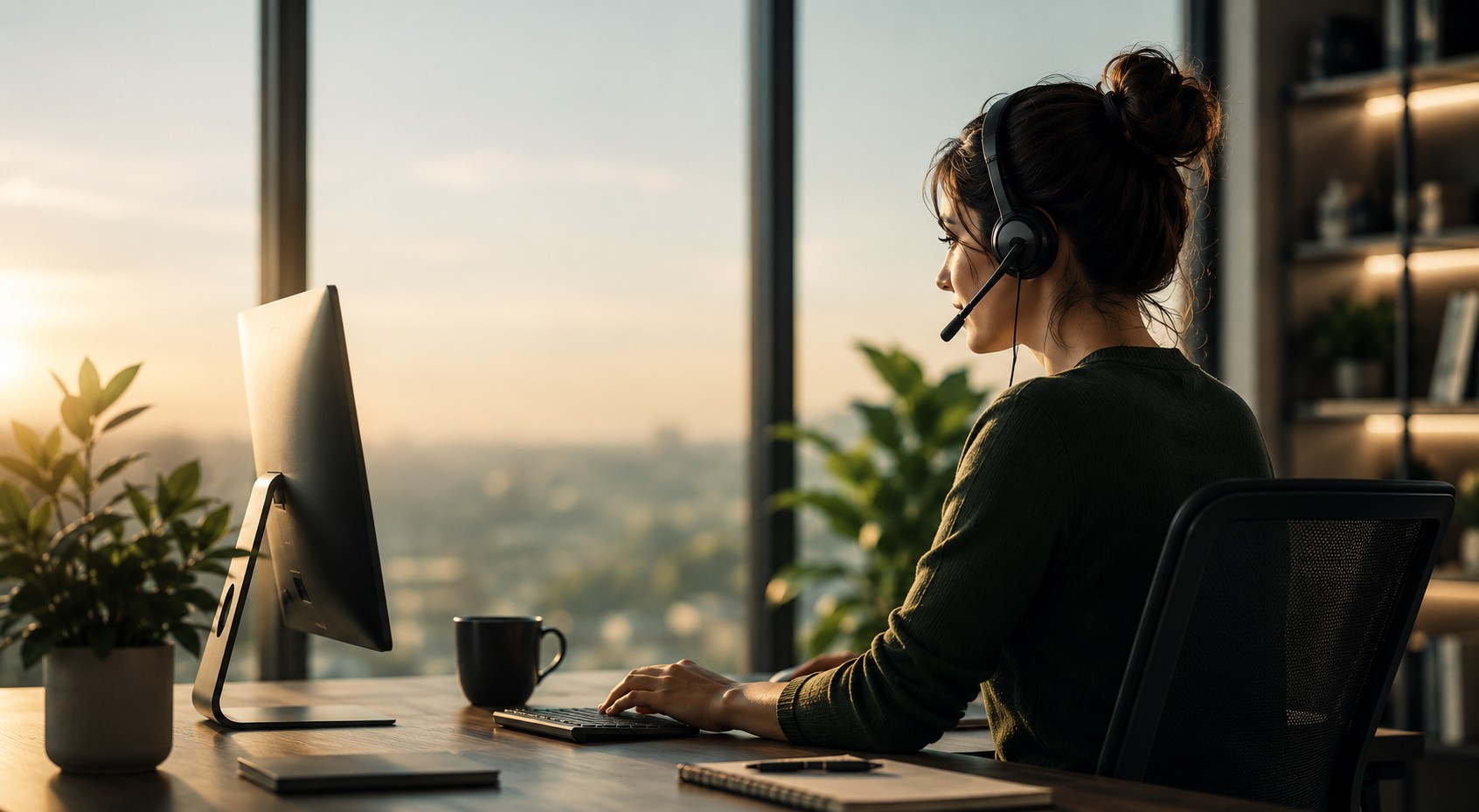
Nobody expects a studio. They expect you to be audible, visible, on time and undistracted. Getting those four things right puts you ahead of a surprising proportion of candidates, and every one of them can be solved in twenty minutes the day before.
The physical set-up
Work through this checklist once and save it as your default.
- Camera at eye level — stack books under a laptop rather than looking down at it.
- Light in front of you, never behind. A window facing you beats any lamp.
- Wired headphones with a mic beat laptop speakers in almost every room.
- Plain background, door closed, phone on silent, notifications off.
- Test the exact platform link fifteen minutes early, not two minutes early.
How to come across on camera
Look at the camera lens when you are speaking and at the screen when they are — that reads as eye contact. Slow down by roughly ten percent, because compression makes fast speech harder to follow. Keep a single page of notes just off-camera with your three stories and three questions; do not read from a script.
Recorded and one-way interviews
Asynchronous video screens are increasingly common in high-volume hiring. You usually get thirty seconds to prepare and up to two minutes to answer. Answer as if a person were present, use the full time without rambling, and if a retake is offered, take it only once — later takes tend to sound flatter, not better.
When something breaks
Technology fails and interviewers know it. Have the recruiter's phone number to hand, say plainly "I've lost the audio, may I dial in?", and carry on. Handling a glitch calmly is itself a positive signal, particularly for remote roles.