Why it works as flexible income
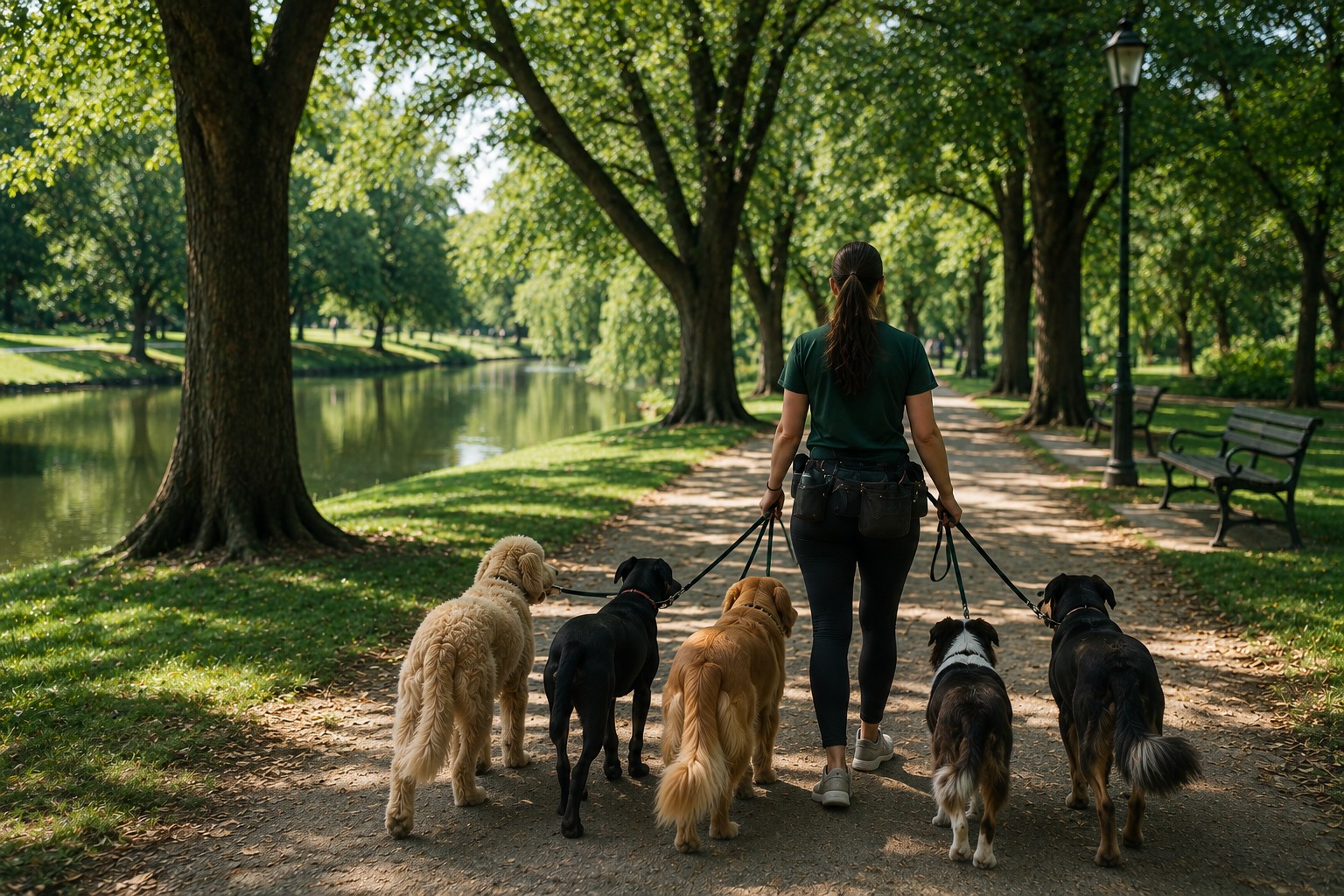
Dog walking has almost no barrier to entry, pays weekly on most platforms, and builds naturally into recurring bookings. A walker with eight regular midday clients in a single neighbourhood can earn a reliable part-time income without ever advertising again.
Setting up properly
The set-up is short but worth doing before your first booking rather than after.
- Create a profile with clear photos and your genuine availability windows.
- Get pet first-aid trained — it is inexpensive and converts nervous owners.
- Consider basic public liability insurance; some platforms include cover.
- Buy spare leads, poo bags, water and a towel. Owners notice.
- Decide your service radius — tight beats wide, because travel is unpaid time.
Getting your first clients
Your first three bookings are the hardest. Price slightly below the local average for the first month in exchange for reviews, say yes to short-notice requests, and ask every satisfied owner for a written review the same day. After roughly ten reviews, inbound requests generally outpace what you can accept.
Rates and scheduling
Typical rates run $18–30 per solo walk depending on the city, with group walks and boarding paying more per hour. Cluster bookings geographically and by time so you are walking, not commuting. Midday is the highest-demand slot; weekends skew to sitting and boarding rather than walks.
Turning it into a business
The walkers who earn most treat it like a service business: consistent photo updates after each visit, a clear cancellation policy, and a short written agreement covering keys, vet permissions and emergency contacts. Those three things also protect you if something goes wrong.